
AI in Semiconductor Manufacturing: From Automation to Intelligence
Key Takeaway
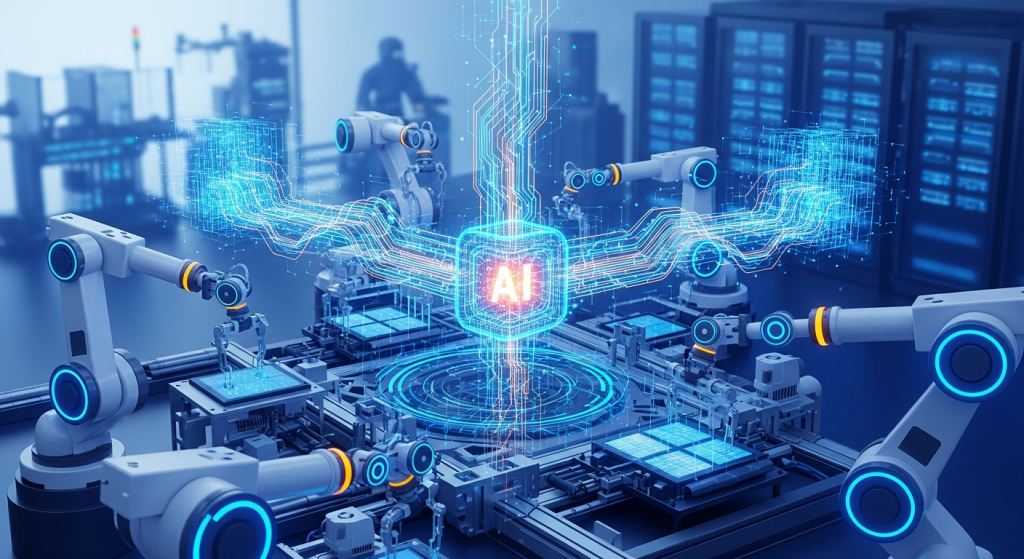
AI in semiconductor manufacturing is evolving from basic automation to true intelligence. Key applications: Virtual Metrology (100% quality coverage), Smart DOE (80% fewer trial wafers), predictive maintenance (30-50% longer MTBF), and design automation (60% time savings).
With the rapid advancement of artificial intelligence, the semiconductor manufacturing industry is undergoing a profound transformation. The application of AI in chip design, process optimization, and equipment tuning is significantly improving production efficiency and product yield.
AI Application Scenarios in Semiconductor Manufacturing
1. Intelligent Design Review
Through deep learning algorithms, AI systems can automatically identify potential defects in design drawings, reducing design rework rates by over 30%. Traditional manual review requires several days, whereas AI-powered review systems can complete the task in just a few hours.
2. Process Parameter Optimization
Based on historical production data, AI models can predict the optimal combination of process parameters, shortening new product introduction (NPI) cycles by 40-60%. Machine learning algorithms continuously learn and optimize, adapting to the requirements of different process modules.
3. Predictive Equipment Maintenance
Leveraging sensor data and AI anomaly detection algorithms, systems can provide early warnings of equipment failures, reducing unscheduled downtime and improving Overall Equipment Effectiveness (OEE) by 15-25%.
Technical Challenges and Solutions
Despite the numerous advantages AI brings, practical applications still face challenges in data quality, model generalization, and computational cost. Our NeuroBox product series adopts an edge AI architecture that delivers local real-time inference while ensuring data security, effectively addressing these pain points.
Looking ahead, as AI chip computing power continues to increase and algorithms continue to improve, artificial intelligence will play an increasingly important role in semiconductor manufacturing, driving the industry toward higher levels of intelligence.
读完这篇,下一步可以很具体
获取一份产线 AI 评估,看看 NeuroBox E3200 / SECS/GEM 怎么接到您的设备。
把设备类型、当前数据接口、工艺目标或良率问题发给我们。工程团队会先判断适合 VM、R2R、Smart DOE、EIP 还是能源优化,再给出下一步建议。
- 适合晶圆厂、设备商、工艺/设备/自动化团队
- 可从 SECS/GEM、Modbus、PLC、CSV/历史数据开始
- 不需要先提交机密 recipe 或客户图纸
Discover how MST deploys AI across semiconductor design, manufacturing, and beyond.